

Beginner view — everything explained simply.
Eloralintid
Lilly's selective amylin compound for weight loss — promising early data, but approved nowhere
In 10 seconds
Eloralintide is an investigational compound from Eli Lilly for weight management. It mimics the fullness hormone amylin and is meant to target its receptor more selectively than broader-acting amylin drugs. The weight-loss figures so far come from phase 2 trials; the large phase 3 trials are only just under way, and it is approved nowhere.
What is it, really?
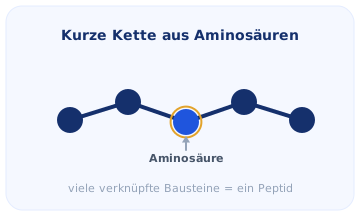
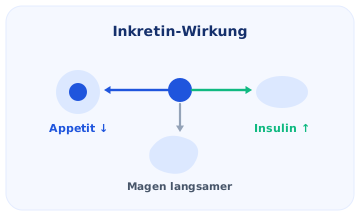
Picture a hormone made by the body that is released together with insulin and makes you feel full: amylin. Eloralintide mimics it — according to manufacturer data from cell experiments, it preferentially targets one particular amylin receptor, unlike broader-acting amylin drugs such as cagrilintide. The idea: dampen appetite just as well, while possibly sparing the stomach. It's being studied on its own and together with tirzepatide (under the name EloraTZP).
In pictures
Structure
Target area
Overweight & obesity (in trials)
Evidence
Animal studies
2/3
Human studies
2/3
Phase 2 trials in humans, phase 3 under way — long-term data still missing
What fans report
Claims — not proof
- High weight-loss figures from phase 2 trials raise hopes of a particularly effective weight-loss drug — an early result, not long-term proof
- Manufacturer's hope: as a selective amylin compound, to be easier on the stomach than broader-acting amylin drugs — so far only inferred from animal experiments in rodents
- Researchers' hope: to help people with type 2 diabetes as well and, along the way, to improve waist circumference, blood pressure, and blood lipids — the decisive phase 3 results are still pending
The reality check
What the facts say
- Approved nowhere as a medicine — a purely investigational compound; the large phase 3 trials (ENLIGHTEN) are only just under way
- In phase 2 trials in humans (48 weeks), participants lost markedly more weight than on placebo, depending on the trial arm — promising, but not yet confirmed in phase 3
- The better stomach tolerability has so far only been inferred from animal experiments; in a phase 2b trial of the tirzepatide combination (preliminary conference data), more participants dropped out because of side effects than on tirzepatide alone
- Nausea and fatigue are common, mostly mild to moderate; the long-term safety of an investigational compound is only incompletely known
- Eloralintide offered as a “research chemical” or “research vial” is untested for identity, purity, and sterility
Risk assessment
A purely investigational compound without approval: the good figures come from phase 2 trials, the large phase 3 results and long-term safety are still missing — and grey-market goods are uncontrolled.
Legal status: In clinical trials only · not approved
Bottom line
A much-watched candidate with encouraging early data — but phase 2 trials are no long-term proof, and it is approved nowhere. Goods offered online as “eloralintide” are untested. Anyone who wants to lose weight is in the right place with a doctor.
No buying · No dosing · Just knowledge
This page informs — it is no substitute for medical advice. If this topic affects you, talk to a doctor.
Why safety matters