Beginner view — everything explained simply.
Machine-assisted translation — the German original version is authoritative.

Hormonal System & Reproduction
Glepaglutid
Glepaglutide · ZP1848 · Zeydovio · Glepaglutid-Acetat
Glepaglutide (INN glepaglutide, development code ZP1848, listed in the EU as Zeydovio) is a synthetic, long-acting analogue of the body's own intestinal hormone GLP-2 (Glucagon-like Peptide-2), developed by the Danish company Zealand Pharma. It is being developed as a subcutaneously administered drug candidate for short bowel syndrome (SBS) in adults - a rare condition in which, following extensive bowel removal, too few nutrients and fluids are absorbed and affected patients depend on parenteral (intravenous) nutrition. In the pivotal Phase 3 study EASE-1 (NCT03690206, 106 adults), twice-weekly administration reduced the required parenteral volume after 24 weeks significantly more than placebo, while once-weekly administration did not meet the endpoint. The US regulator FDA declined approval on 19 Dec 2024 with a Complete Response Letter and recommended a further study; in the EU, the CHMP recommended approval on 17 Sep 2026, but the decision by the EU Commission was still pending as of October 2026. All efficacy statements come from clinical studies; market access has not yet been granted anywhere.
Regulatory status
In clinical trials only · not approved
An investigational drug under regulatory review - as of October 2026 not approved for use in any region: in the EU, the CHMP recommended approval on 17 Sep 2026 (trade name Zeydovio), but the decision by the EU Commission was still pending; in the USA, the FDA issued a Complete Response Letter on 19 Dec 2024, and a confirmatory Phase 3 study has been recruiting since February 2026.
Drug class
Long-acting GLP-2 receptor agonist (synthetic peptide analogue, subcutaneous) - an investigational drug under regulatory review
Half-life (informative)
Descriptive: glepaglutide is designed as a long-acting GLP-2 analogue and was studied subcutaneously on a twice-weekly schedule in the pivotal trials - unlike endogenous GLP-2, which is broken down within minutes by the enzyme DPP-4. This page deliberately states no applicable pharmacokinetic values, dose amounts, or concentrations.
Studied in the literature
Subcutaneous injection. In the pivotal study EASE-1, two dosing schedules (twice-weekly and once-weekly) were tested against placebo; an autoinjector was studied for administration. This is not an instruction for use but describes exclusively how the substance was studied in trials.
Mechanism of action
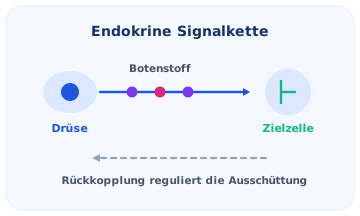
Glepaglutide is a long-acting analogue of human GLP-2. GLP-2 is naturally secreted by the L cells of the intestine and promotes the growth and function of the intestinal mucosa. According to the assessment by the European Medicines Agency (EMA), glepaglutide increases blood flow to the intestine and portal vein, reduces gastric acid secretion and intestinal motility, and stimulates the growth of the intestinal mucosa. The goal is to support the adaptation of the remaining bowel and thereby improve the absorption of nutrients and fluids and reduce the need for parenteral nutrition. Endogenous GLP-2 has a duration of action of only a few minutes because it is rapidly broken down by the enzyme DPP-4; glepaglutide, as a long-acting analogue, is designed to act considerably longer and was tested in the studies on a twice-weekly schedule. GLP-2 belongs to the same proglucagon-derived hormone family as GLP-1 but acts via its own receptor and targets a different indication - it is expressly not a metabolic or weight-loss agent like the GLP-1 drugs semaglutide or tirzepatide.
The extended duration of action compared with endogenous GLP-2 is the basis for the studied, only twice-weekly administration. Specific dose amounts, concentrations, dose levels, or preparation and injection instructions are deliberately not stated here - this is an educational overview, not a usage guide. Such information belongs exclusively in the hands of treating physicians specialized in short bowel syndrome, within the context of treatment or a study.
Research history
Glepaglutide (development code ZP1848) was developed by Zealand Pharma A/S (Denmark) as a long-acting GLP-2 analogue for short bowel syndrome. The pivotal Phase 3 study EASE-1 (NCT03690206) started on 4 Oct 2018 and was completed on 26 Jul 2022; it enrolled 106 adults and compared a twice-weekly regimen, a once-weekly regimen and placebo (quadruple-masked). Based on the EASE program, Zealand submitted a New Drug Application to the US regulator FDA. On 19 Dec 2024, Zealand reported a Complete Response Letter from the FDA: in the regulator's view, the documentation did not fully demonstrate the efficacy and safety of the dosage to be marketed; the FDA recommended an additional clinical study. On 2 Jun 2025, Zealand announced the submission of the EU Marketing Authorization Application to the EMA, based on EASE-1 as the pivotal study, interim results of the extension studies EASE-2 and EASE-3, and the mechanistic study EASE-4 (Phase 3b). As a confirmatory study, the Phase 3 study EASE SBS 5 (NCT07197944) began, which according to the registry has been recruiting since 11 Feb 2026. On 17 Sep 2026, the EMA's Committee for Medicinal Products for Human Use (CHMP) issued a positive marketing authorization recommendation for the trade name Zeydovio; the final decision by the EU Commission was still pending as of October 2026. The full EASE-1 results were published peer-reviewed in the journal Gastroenterology (print edition April 2025, online ahead of print on 19 Dec 2024). Context: the established GLP-2 analogue for short bowel syndrome to date is teduglutide (Revestive/Gattex); another candidate in the same class in Phase 3 is apraglutide.
Positive aspects
What the research shows that is promising
Research areas
- Short bowel syndrome with intestinal failure (SBS-IF) in adults dependent on parenteral nutrition - reducing the need for parenteral nutrition/fluids (pivotal study EASE-1; confirmatory study EASE SBS 5 since 2026)
- Promoting intestinal adaptation and intestinal mucosal growth
- Long-term efficacy and safety in the extension studies EASE-2 and EASE-3
- Mechanistic effects on intestinal fluid and energy absorption (study EASE-4)
Documented effects (from the literature)
- EASE-1 (Phase 3, NCT03690206, 106 adults with short bowel syndrome; peer-reviewed in Gastroenterology 2025): twice-weekly administration reduced the weekly required parenteral volume after 24 weeks significantly more than placebo (p=0.0039).
- EASE-1: once-weekly administration did lead to a numerical reduction but did not reach statistical significance for any primary or key secondary endpoint.
- EASE-1 (Gastroenterology 2025): with twice-weekly administration, 65.7% achieved a reduction in parenteral need of at least 20% (weeks 20 and 24) versus 38.9% with placebo (p=0.0243).
- EASE-1 (Gastroenterology 2025): in the twice-weekly arm, 5 treated patients (14%, i.e., "about one in seven", as the EMA/CHMP assessment also phrases it) became fully independent of parenteral nutrition and fluids after 24 weeks (enteral autonomy); none in the placebo group. Across both glepaglutide arms combined, the manufacturer reported nine patients fully weaned off.
- Common adverse reactions according to the EMA assessment: injection-site reactions, stoma complications (in people with a stoma), abdominal pain, abdominal distension/bloating, nausea, fluid retention/overload, and vomiting.
Risk analysis
What to view critically and honestly
Regulatory status by region
The applicant is Zealand Pharma A/S. After the marketing authorization application was submitted on 2 Jun 2025, the CHMP issued a positive marketing authorization recommendation for Zeydovio on 17 Sep 2026 - for the treatment of adults with short bowel syndrome who are stable following a period of intestinal adaptation after surgery. The binding decision is then made by the EU Commission; it was still pending as of October 2026 according to the EMA page (the product is still listed there at the opinion stage). The full prescribing information (SmPC) is published only after approval by the EU Commission.
Zealand reported a Complete Response Letter from the FDA on 19 Dec 2024: in the regulator's view, the submitted data did not fully demonstrate the efficacy and safety of the dosage to be marketed; the FDA recommended an additional clinical study. Zealand stated that it intended to agree on a path to approval with the FDA. The confirmatory Phase 3 study EASE SBS 5 (NCT07197944, randomized, double-blind, placebo-controlled, with around 90 planned participants) has, according to the registry, been recruiting since 11 Feb 2026; primary completion is estimated for 23 Oct 2028.
As a procedure running centrally through the EMA, availability in Germany would follow only after an approval decision by the EU Commission; this was still pending as of October 2026. There is currently no regular access; at most, participation in a clinical study may be an option. The GLP-2 analogue already available in the EU for short bowel syndrome to date is teduglutide.
Safety concerns & caution
- Not approved: efficacy and safety have not yet been conclusively confirmed by regulators - the FDA requested a further study in 2024, and the EU Commission had not yet decided as of October 2026.
- Once-weekly administration missed the primary endpoint in EASE-1; the demonstrated benefit relates to twice-weekly administration and above all to the volume reduction, not to a routine, complete discontinuation of parenteral nutrition.
- In 2024, the FDA explicitly criticized that the evidence on the dosage to be marketed was insufficient - an open issue that the confirmatory study EASE SBS 5 is intended to resolve.
- As a GLP-2 agonist, the substance stimulates cell growth in the intestinal mucosa; for GLP-2 analogues as a class, class-typical expected risks such as proliferative effects (including on polyps/neoplasms), changes to the gallbladder and pancreas, and fluid overload are carefully monitored. Whether these occur in an individual case can only be assessed by a physician.
- Short bowel syndrome is a severe, complex disease requiring life-sustaining parenteral nutrition; treatment decisions belong unavoidably in specialized medical hands.
Risks of gray-market purchase
- Glepaglutide is a non-approved investigational drug: any material offered outside a controlled study or - after any approval - outside a medical prescription is grey-market goods without regulatory quality control.
- "Research chemical" offers (peptide powder from the grey market) provide no guarantee whatsoever of identity, purity, sterility, correct content, or freedom from impurities and endotoxins.
- With such a severe underlying condition, self-experiments with grey-market peptides can jeopardize life-sustaining parenteral nutrition and are highly risky.
- There is no legitimate use outside medical supervision; sources, procurement routes, and dose or usage instructions are deliberately not stated on this page.
Frequently asked questions
Is glepaglutide the same as a weight-loss injection (GLP-1)?
No. Glepaglutide acts on the GLP-2 receptor, not on GLP-1. GLP-2 and GLP-1 do come from the same hormone family, but GLP-2 promotes the growth and function of the intestinal mucosa and is being studied for short bowel syndrome - not for weight loss or blood-sugar lowering like semaglutide or tirzepatide.
Can glepaglutide already be prescribed?
As of October 2026, no. In the USA, a Complete Response Letter from the FDA has been in place since December 2024. In the EU, the CHMP recommended approval on 17 Sep 2026 (trade name Zeydovio), but the final decision by the EU Commission was still pending. Access currently exists at most through participation in a clinical study.
What did the EASE-1 study show?
EASE-1 was an international Phase 3 study with 106 adults with short bowel syndrome. Twice-weekly administration reduced the weekly required parenteral volume after 24 weeks significantly more than placebo (p=0.0039); 65.7% achieved at least a 20% reduction versus 38.9% with placebo (p=0.0243). Once-weekly administration, by contrast, missed statistical significance.
Why did the FDA decline glepaglutide in 2024?
In December 2024, the FDA concluded that the submitted data did not fully demonstrate the efficacy and safety of the dosage to be marketed, and recommended an additional clinical study. This confirmatory Phase 3 study (EASE SBS 5) has been recruiting since February 2026. A Complete Response Letter is not a final rejection but names conditions for a renewed review.
What exactly is glepaglutide being studied for?
For short bowel syndrome (SBS) in adults. In this condition, the bowel cannot absorb enough nutrients and fluids after extensive removal, so affected patients depend on parenteral (intravenous) nutrition. The goal of glepaglutide is to promote the adaptation of the remaining bowel and reduce the need for parenteral support - not to reduce weight.
How does glepaglutide differ from teduglutide and apraglutide?
All three are GLP-2 analogues for short bowel syndrome. Teduglutide (Revestive/Gattex) is the established, approved agent of the class to date. Glepaglutide and apraglutide are newer, long-acting candidates designed for less frequent administration; both are not yet regularly approved as of October 2026 and are in advanced clinical testing.
Sources
Primary and reference sources for your own reading.
- Europäische Arzneimittel-Agentur (EMA)Zeydovio (glepaglutide) – Zusammenfassung des positiven CHMP-Gutachtens
- Zealand Pharma A/S (Unternehmensmitteilung)U.S. Food and Drug Administration issues Complete Response Letter for the glepaglutide New Drug Application for the treatment of short bowel syndrome
- Zealand Pharma A/S (Unternehmensmitteilung)Zealand Pharma submits Marketing Authorization Application to the European Medicines Agency for glepaglutide in short bowel syndrome
- Jeppesen PB et al., Gastroenterology 2025;168(4):701-713.e6 (PMID 39708985)Glepaglutide, a Long-Acting Glucagon-like Peptide-2 Analogue, Reduces Parenteral Support in Patients With Short Bowel Syndrome
- ClinicalTrials.gov (NCT03690206)EASE SBS 1: Efficacy and Safety Evaluation of Glepaglutide in Treatment of Short Bowel Syndrome (Phase 3) – Studienregistrierung
- ClinicalTrials.gov (NCT07197944)EASE SBS 5: Phase-3-Studie von Glepaglutid bei SBS-IF (bestätigende Studie) – Studienregistrierung
Related substances
Mentioned in these research updates
Unfamiliar terms? Look them up in the glossary or read the fundamentals.
This profile is for information and education only. It is not medical advice and deliberately contains no dosing or usage details. Decisions about use belong in a doctor’s hands.